Wednesday, August 7, 2024
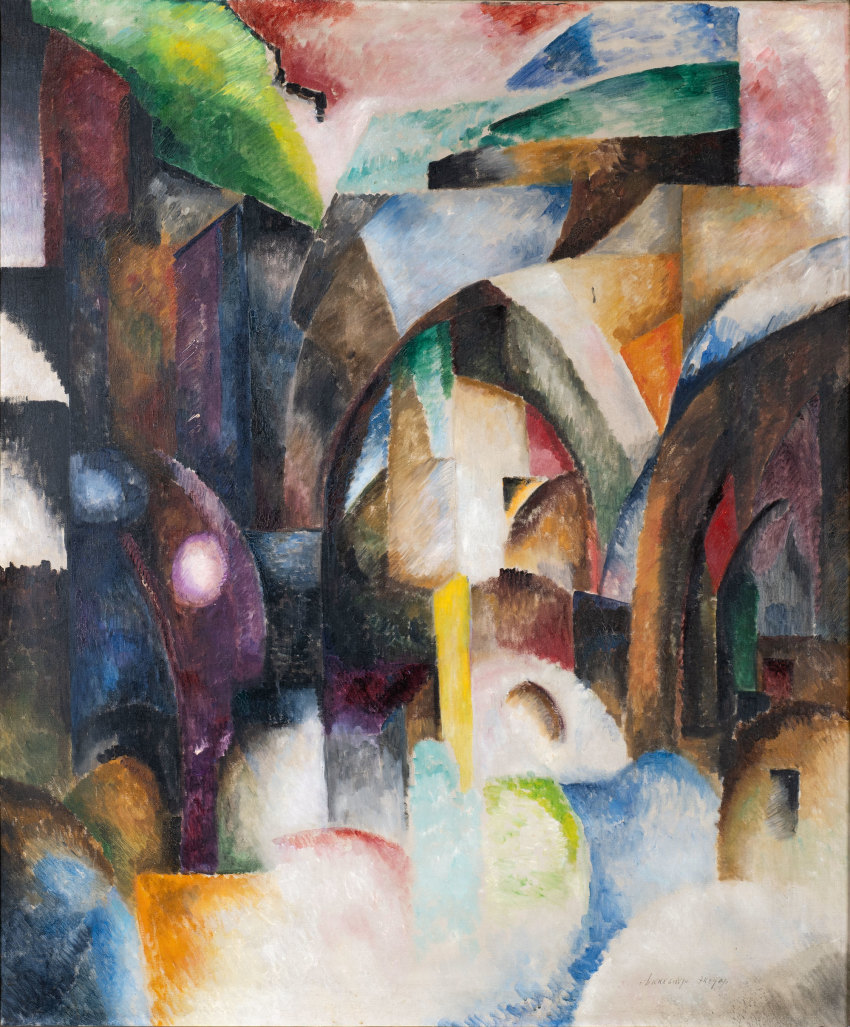
'In the Eye of the Storm: Modernism in Ukraine, 1900–1930s' (Royal Academy until October 13 2024): Bright Colours, New Names
Thursday, July 25, 2024
'Michelangelo: The Last Decades' (British Museum until July 28 2024): Strength and Fragility
Tuesday, July 16, 2024
Guercino at Waddesdon: King David and the Wise Women (Waddesdon Manor until Oct 20 2024): Deceptive Ease
Guercino is not a household name. If you like Italian Baroque painting then he will be familiar, but whether he is enough to tempt the casual visitor to travel to Waddesdon Manor and pay the not inconsiderable (for non National Trust members) entrance fee is debatable. Certainly, on the day I went, the house was heaving to the point where you felt inexorably carried along in the crowd, but the single room devoted to Guercino was a haven of calm and relative emptiness. Credit then, arguably, to Waddesdon for putting on this mini exhibition of his works but at the same time, it was disappointing to see them penned into such a small space.
The exhibition is based around Waddesdon's own King David, now shown with two National Gallery Sybils and one from the Royal Collection, but by happy coincidence, the unexpected star is a recent acquisition. Moses was bought by the Rothschild Foundation after it came to light in Paris in 2022: it is the sort of quality Old Master which British institutions can rarely afford to bid for. It stands as a quiet yet potent reminder amid all the flashy bling of the Manor, of the lingering wealth and influence of the Rothschild family - a poignant reminder too after the recent death of the 4th baron. Arguably out of place in the company of David and his Sybils, the Moses is on a much more intimate scale and belongs to Guercino's earlier tenebrist style. It feels a little swamped by the red damask richness of the room and by its neighbours' weighty calm. But ultimately its presence proves that Guercino is an artist of greater complexity, variety and emotional heft than the exhibition might otherwise have shown.
Giovanni Francesco Barbieri (1591-1666) has come down to history as Guercino, 'the little squinter', cross eyed, poor born, self taught. He worked mainly around the vibrant Baroque artistic centre of Bologna, but also spent a few years in Rome. Aside from some almost Giorgione-esque landscapes, his focus was religion and the human figure. I first came across his work at the Fitzwilliam Museum in Cambridge where his small, intense Betrayal of Christ has a dark, dramatic claustrophobia which immediately recalls Caravaggio's treatment of the same subject. Guercino's early work is full of movement, confusion and crowded figures exaggerated by dark shadows and anguished expressions. The single figure of Moses is like a close-up from one of these scenes, his hands raised protectively as he looks towards the light, uncertain how to react in the presence of god. Head and arms disembodied by a geometry of deep folds so that we focus entirely on gesture and expression.
The other works in the exhibition could almost be by a different hand. On two metre plus canvases, carefully posed, authoritative figures inhabit classical architectural settings, surrounded by attributes of wisdom. There is a deceptive simplicity in Guercino's late work, which renders awkward poses easy, conveys an airy depth lightly and models form with subtle softness. In these works Guercino is a Baroque Raphael, wearing his skill with casual insouciance, almost convincing the viewer that there is nothing to see here. Set up together in a confined space, it is too easy to sweep your eye across the room, note the similarities and think him a lesser artist than he is, churning out sybils on autopilot. In truth, the Samian Sybil was a repeat order, after the initial pendant for King David, the Cumaean Sybil was snapped up by another buyer.
Don't be fooled, however. Guercino is no pot-boiler. The canvases breath with life. Poses are chosen to convey body and movement: the thrust of David's sandalled foot, the backward curve of the Cumaean's head. Draperies catch the light, gentled rumpled like waves on a calm day, so that large blocks of colour become instead objects of interest. The embrace of pink around the Libyan Sybil, the inner swirl of three centrifugal colours creates the mood of introverted contemplation. Tonal highlights are balanced: open books resonate cross the canvas, reflected in exposed flesh, white headdresses, all signposts on a visual journey. And the same applies to Guercino's characteristic palette, limited, cool colours, worked through with repeated effect. Even pinks and oranges have a restraint, maintaining the intellectual seriousness of his female prophets. All this and you haven't begun to take in the little details - the ruffled pages, the lace edges, the strands of hair.
Waddesdon take their art seriously - all their artworks, for instance, are beautifully lit - and it perhaps seems churlish to criticise the effort which has gone in to secure these loans and present the show, but I wish they given the paintings a little more space, a slightly more sympathetic hang, perhaps sought out another loan which would have offered a companion to the Moses. That said, Guercino is a marvellous, underrated and unfamiliar artist and any opportunity to see a gathering of his work is to be welcomed. Once you know about the little squinter, you will not forget him.
Wednesday, April 24, 2024
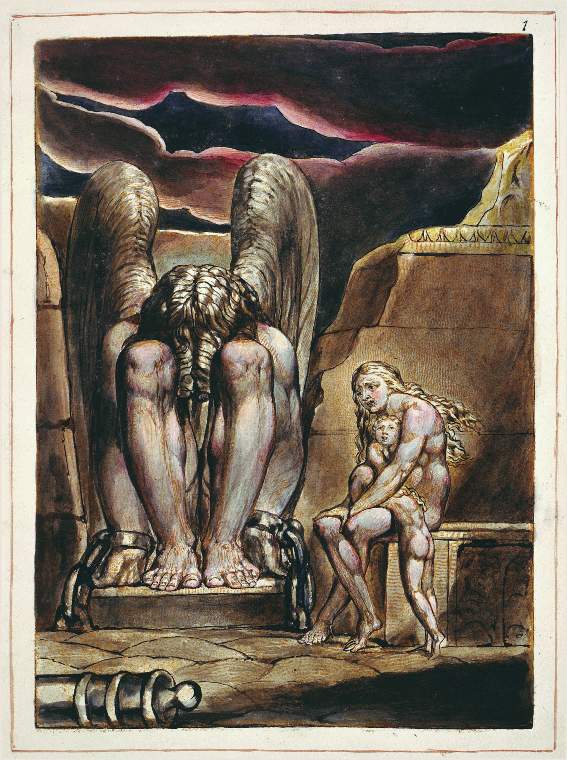
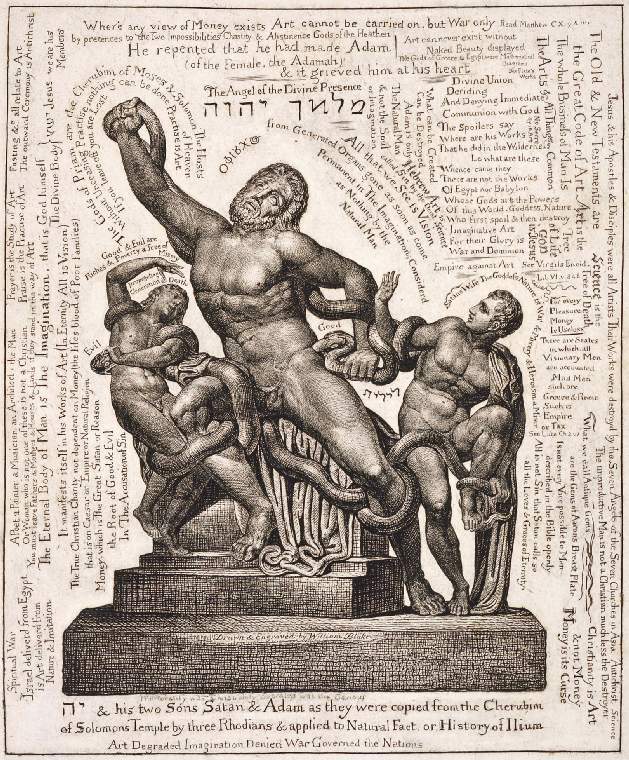
'William Blake's Universe' (Fitzwilliam Museum until May 19 2024): Trying Too Hard to be Universal
It's never a good thing if the main memory of an exhibition is the colour of the walls. Sadly, the Fitzwilliam's William Blake's Universe will forever be linked in my mind with the daffodil yellow of the final room. Strong colours are the fashion of the moment (a moment which is hopefully reaching its end) but they are always intrusive, an assertion of curatorial presence, even when you agree with the choice, and that intrusiveness is magnified in an exhibition of mainly small-scale prints and drawings where there is so much more wall on show.
Monday, April 15, 2024
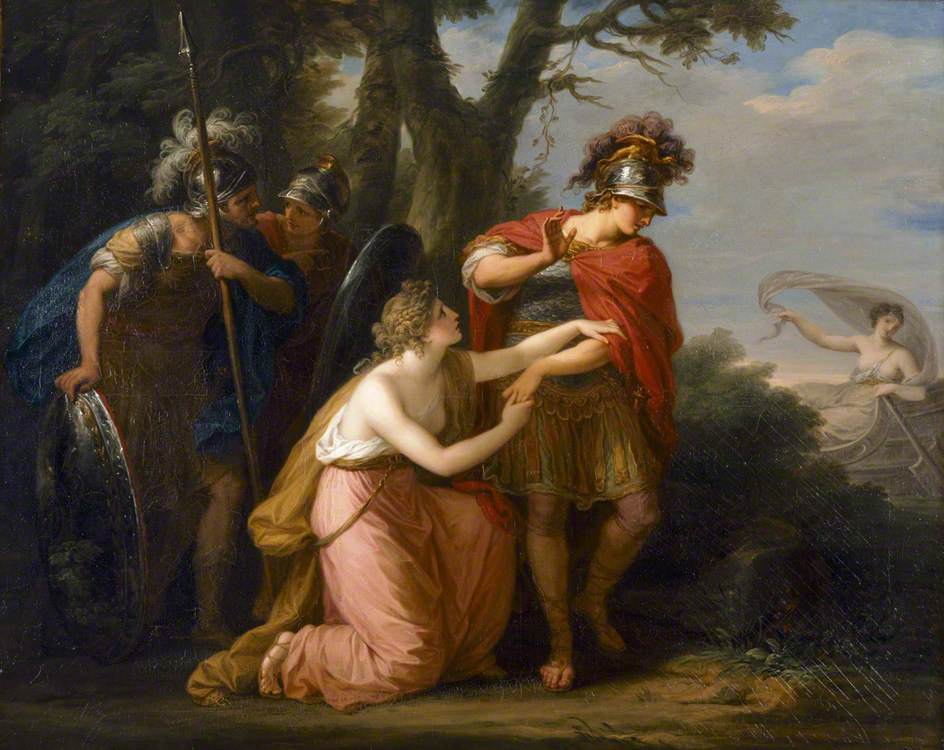
Angelica Kauffman (Royal Academy until June 30 2024): More Than Just a Woman Artist
Tuesday, April 9, 2024
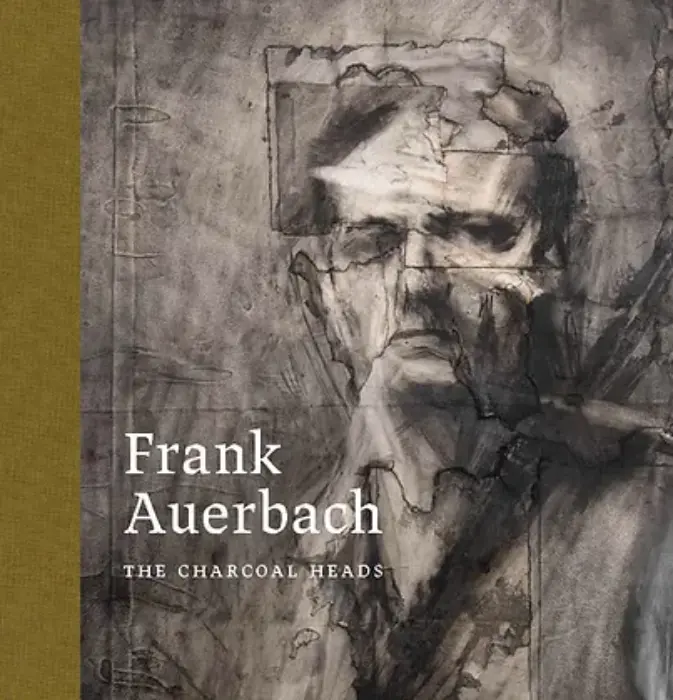
'Frank Auerbach: The Charcoal Heads' (The Courtauld until May 27 2024): Creative Destruction
Auerbach is no ordinary portraitist. His subjects are familiar, familial, himself, seen here in repeat. He observed them over months, each sitting recorded and erased in a process of layering and repeat. The time and process are writ large in scuffs and tears and mends: whilst Auerbach's oils seem often a process of building up, here he is constantly breaking down. It is one of the many contradictions. Works which have been produced so slowly are utterly immediate, a flash of dynamic lines. Faces in close-up scale largely avoid our gaze, with hollows for eyes which tilt down or turn aside. Line and structure are etched with a rubber. Never has creation seemed so destructive.
There is no context given to these figures - no background, no space, little detail - but once you know the context, rawness hangs acrid in the air. Auerbach's own tragedy, refugee child of parents murdered in Auschwitz, and the long, lingering shadow of the Second World War: physical and mental scars, visible wounds, patches of poverty and endless, endless grey. The occasional slash of colour seems like an attack rather than a respite. The faces take on a ghoulish emptiness, stripped back, almost genderless. Yet the final, greatest paradox of this show is that humanity triumphs in the end. Auerbach's self portraits are thoughtfully challenging in their strong, straight stare. His cousin, Gerda Boehm, another refugee, his substitute parent, retains her poise and gentility. Helen Gillespie is all angles and sharp edges, positively glinting with wit. These characters breath and move, with subtle shifts of pose, lighting and expression across the different charcoals. Not ghosts after all.
Wednesday, April 3, 2024
'Entangled Pasts: 1768–now Art, Colonialism and Change' (Royal Academy until 28 April 2024): Difficult to Disentangle
In their absence, however, is blandness and vagueness. Too often I was left wondering why? Why was John Singleton Copley there? Because he, like Benjamin West was American, although there was no attempt to analyse their unique position as colonial but white? Because of the Black figure ignored in a caption which focuses instead Watson's survival to become Mayor of London? Because Copley was a big eighteenth century name they could get hold of? Similarly, Bowling and Gallagher are part of a room dedicated to the sea which is split awkwardly between the Middle Passage and whaling with a couple of second-rate Turners for good measure. The 'Constructing Whiteness' display feels especially thrown together. Frank Dicksee's laughably awful Startled doesn't need a caption which ties itself in knots over 'aryanising', 'nordic' and 'classical'. The slippery language emphasises a nettle ungrasped: issues of Academy racism are taken up to the Second World War and then glossed over. Surely this was the moment to acknowledge the embarrassing truth that Sonia Boyce, the first Black female academician, was only elected in 2016.
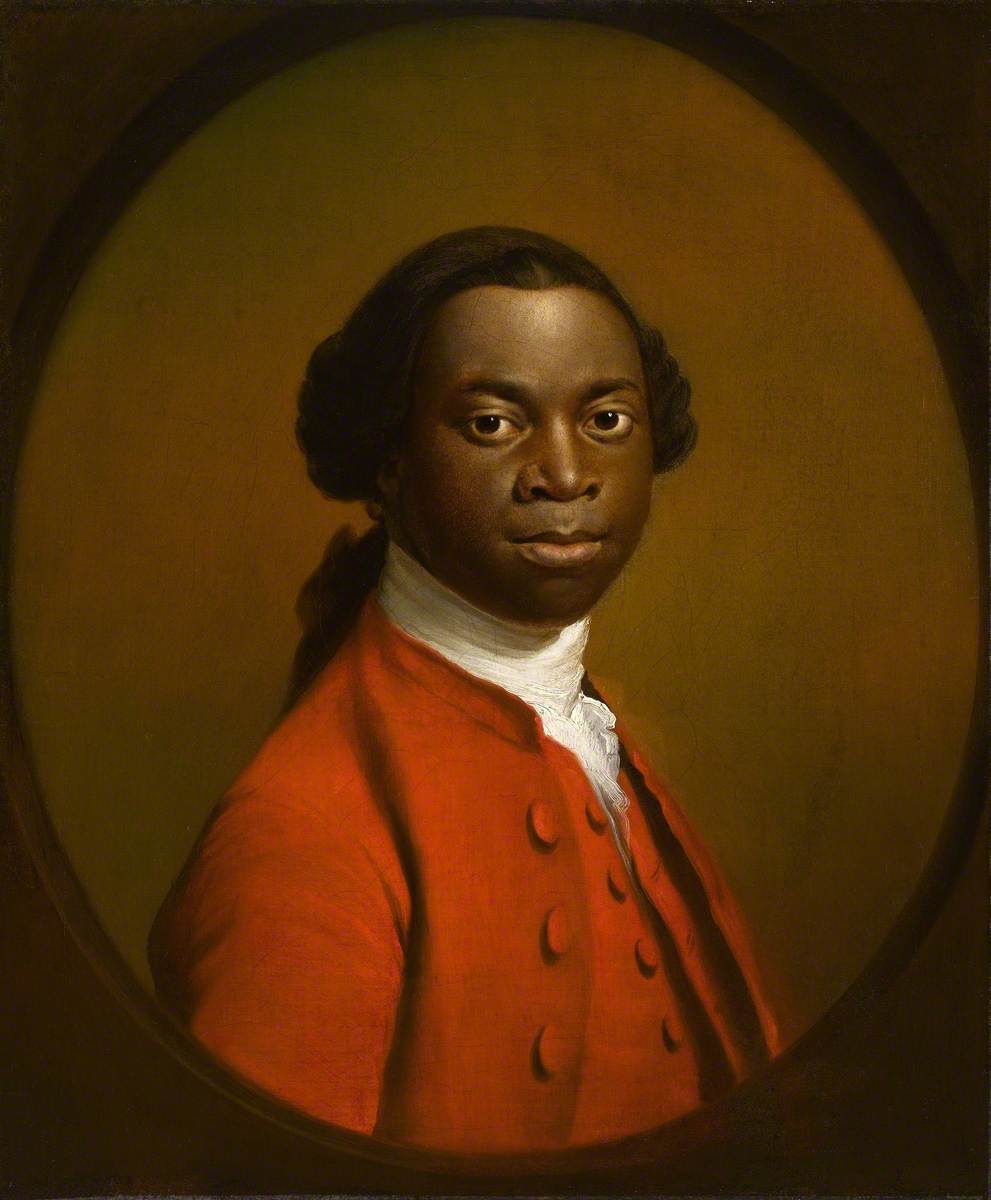
'Entangled Pasts' raises obvious comparisons with the recent, albeit much smaller, 'Black Atlantic' exhibition at the Fitzwilliam Museum - even some of the same works are on show. The Fitzwilliam went for tightly written text and impeccable lighting to create nuance and structure and maximise their limited exhibits. The Royal Academy, in contrast, underuses Barbara Walker's Vanishing Point and the beautiful Man in a Red Suit is shown, along with fine portraits by Gainsborough, Reynolds and others in a gloomily empty octagon. Isaac Julien's film deserves a better space: crowded watchers jostle with those trying to get through to the sculptures beyond and the tintypes behind are impossible to see. Meanwhile, Lubaina Himid's Naming the Money installation sprawls over two rooms, its impact lessened as a result. Inevitably, with 100 works and 50 artists, there are weaker pieces and you could certainly make the case for some judicious pruning.
In some ways 'Entangled Pasts' is a show of (mainly) good art, poorly served. But maybe that doesn't matter. Its big, rambling, inconclusiveness is in itself a metaphor for the entangled past it's seeking to represent. There are no easy answers or straightforward narratives. There are questions and problems and dead-ends. The curators resolutely refuse to tell us what to think, but thank goodness for that. What the show does - and arguably what it could have done even more - is pit the past against the present and let the results speak for themselves. Let's have more of the same.
Zurbaran (National Gallery until August 23 2026): Perfection in a Piece of Cloth
Francisco de Zurbaran, The Martydom of St Serapion , 1628, Wadsworth Atheneum, Hartford Connecticut Francisco de Zurbaran is often describe...
-
Georges Seurat, Le Chahut, 1889–1890 , Kröller-Müller Museum, Otterlo, Netherlands. The title of the National Gallery's new exhibit...
-
Gwen John, Mrs Atkinson , 1898, Metropolitan Museum of Art S mall is big in Gwen John's work. None of her canvases are very large and ma...
-
John Singer Sargent, Simplon - Mrs Barnard and her Daughter Dorothy , 1905-15, Birmingham Museums Late nineteenth century Europe was awash...